
Electronic Instructions for Use (eIFUs) are set to revolutionise how medical device instructions are delivered. A recent EU survey has paved the way for significant expansion, enabling more devices to move away from traditional paper IFUs. This article breaks down the key changes and what they mean for you.
The EU MDR establishes the general requirements for instructions for use (IFU). Implementing Regulation (EU) 2021/2226 determines which devices can use Electronic Instructions for Use (eIFUs), and which must use physical IFUs. In this article, we will review its key information and how it affects the medical device industry and examine a new draft amendment to the legislation.
The legislation defines instructions for use in electronic form as “instructions for use displayed in electronic form by the device, contained in portable storage media supplied by the manufacturer together with the device, or made available through a software or a website.” Essentially, eIFUs are digital instructions, accessible via the device, storage media, software, or a website.
For a more detailed look at what needs to go in your IFU, check out our recent article on the topic.
Which devices can currently have an eIFU?
While all manufacturers must provide an electronic copy of the IFU on their website, they may currently only be provided instead of paper for the following categories of devices:
- Implantable and active implantable devices and their accessories (e.g. pacemakers)
- Fixed medical devices and their accessories (e.g. MRI scanner)
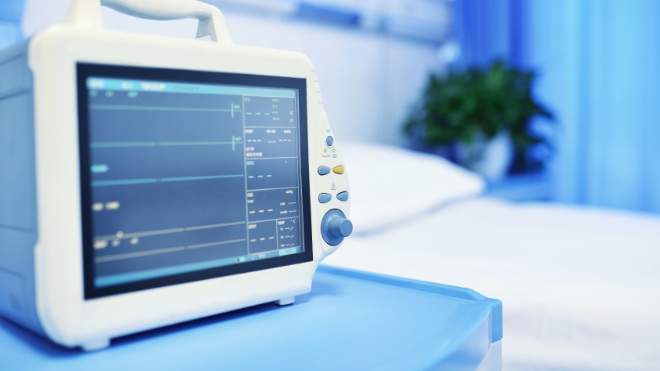
- Medical devices and their accessories fitted with a built-in system for visually displaying the instructions for use (e.g. ultrasound equipment)
- If a device fits into one of these groups, it must also be intended for use only by professional users and have undergone a comprehensive risk analysis as discussed below.
eIFU and Software as a Medical Device (SaMD)
For SaMD covered by the MDR, eIFUs are permitted for devices intended for use by all user types, including lay persons. Manufacturers may provide eIFUs using the software itself instead of in paper form.
Why was the amendment introduced?
The Commission carried out a survey on replacing paper-based IFUs with eIFUs from 1st August to 10th October 2024. The survey results showed a clear preference among healthcare professionals for receiving IFUs electronically rather than on paper. They concluded that providing IFUs in electronic form helps the health sector deliver better and faster solutions.
The amendment proposes broadening the scope of application of IR (EU) 2021/2226 to “all medical devices and their accessories covered by the EU MDR that are intended for professional users”.
More significantly, the Commission are currently collecting feedback from stakeholders on the proposed amendment, so complete their survey to have your say and make sure your voice is heard.
Risk assessment and eIFUs
Devices utilising eIFUs must undergo the same comprehensive risk assessment as all devices under the EU MDR. IR 2021/22226 supplements this with additional areas which the risk assessment must cover:
- That the user has access, knowledge and experience of the hardware and software needed to display the instructions for use in electronic form.
- Safeguards are needed to ensure that the electronic data and content are protected from tampering, and that backup mechanisms are in place in case of a hardware or software fault.
- Foreseeable medical emergencies requiring the provision of information in paper form, and an evaluation of the period within which a paper IFU shall be provided upon request.
- The impact caused by the temporary unavailability of the specific website or the internet in general.
- Assessment of the website’s compatibility and usability, and its ability to display eIFUs of multiple different devices while minimising the risk of users looking at the wrong eIFU.
- The management of different versions of the eIFU.
Manufacturers can only proceed with an eIFU if this risk assessment demonstrates no decreased level of safety compared to a paper IFU.
Further requirements for manufacturers
If manufacturers provide only an eIFU, they must follow these obligations:
- They must have a system in place to provide a paper IFU at no additional cost to the user at the latest within 7 days of receiving a request from a user.
- The existence of an eIFU must be indicated on the label.
- eIFUs must be available on their website in any official language of the EU, as per the member state in which the device is used.
- All historical eIFUs shall be available on their website.
The new draft amendment to the regulation also stipulates that eIFUs must be available through a persistently accessible URL, which the manufacturer shall provide to the UDI database.
Conclusion
eIFUs offer many benefits to both manufacturers and users. They are often easier to access, reduce physical IFU production costs, and can be updated far more quickly than paper IFUs. They are, however, limited by poor internet access and user interface design challenges.
The future of IFUs is digital, delivering cost savings, faster updates, and improved accessibility. Navigating the regulatory landscape can be challenging, but with Mantra Systems, you can move forward with confidence. Act now — partner with us to ensure your eIFUs are compliant and your devices are approved without delay.