
What Is a UDI and Why Does It Matter?
The Unique Device Identifier (UDI) is a crucial element in the medical device industry, designed to enhance the traceability and safety of medical devices. Think of UDI as a sort of “digital fingerprint” for each device—a unique combination of numbers and codes that provide important details about the device, such as its model, manufacturing batch, and more. It’s like putting a superpower into your device packaging, empowering manufacturers, regulators, and healthcare providers to quickly identify and track a device.
A UDI is made up of two core components:

1. UDI-DI (Device Identifier)
This is the fixed portion of the UDI and uniquely identifies the model or version of the device. It’s used to identify the product at a high level, no matter where it is sold or used. The UDI-DI is assigned by the manufacturer and remains constant across all units of that particular device.
2. UDI-PI (Production Identifier)
The variable portion of the UDI includes critical details about the device, such as its serial number, lot number, expiry date, or manufacture date. This part of the UDI ensures the traceability of each individual unit, making it easy to track and manage the device throughout its lifecycle.
What’s the UDI Carrier?
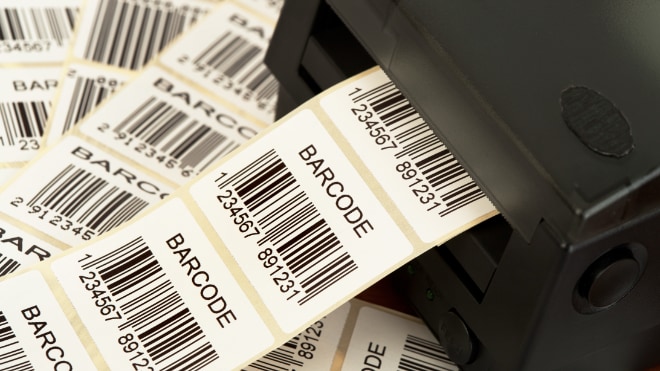
The UDI carrier is the machine-readable version of the UDI that is placed on the label or packaging of the medical device. It’s typically a barcode or QR code—something that can be quickly scanned by healthcare providers, distributors, or anyone handling the device. UDI carriers make tracking the device in real-time much more efficient.
There are two common forms of UDI carriers:
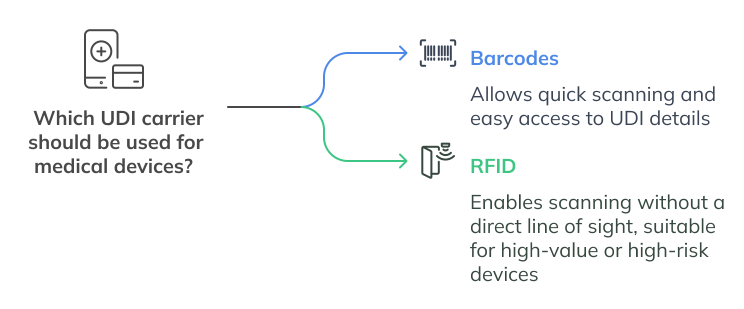
In accordance with Annex VI, Part C, Section 4.1, the UDI Carrier – both the Automatic Identification and Data Capture (AIDC) and the Human Readable Interpretation (HRI) must be placed on the label, the device itself, and all higher packaging levels. However, Section 4.2 allows the UDI carrier to be placed on the next higher packaging level if space on the unit of use packaging is limited. Additionally, Section 4.3 states that for single-use devices of Classes I and IIa, the UDI carrier is not required on the individual packaging but must appear on the next higher packaging level (e.g., a carton containing multiple devices).
Understanding UDI and EUDAMED
Under the EU MDR 2017/745, medical device manufacturers must submit UDI data to EUDAMED for all devices that fall under the regulation. Here’s how UDI submission fits into EUDAMED:
- Manufacturers must submit UDI-DI information for each product (or product model) to EUDAMED to ensure that it is tracked in the European market.
- UDI-DI Data: This includes the unique identifier for each device, along with essential details such as the device’s name, model, classification, and the manufacturer’s information.
- EUDAMED Registration: Manufacturers must first register in EUDAMED to begin submitting UDI-DI information. Only those devices that are subject to MDR or IVDR are required to be listed in EUDAMED.
UDI Format Explained
In the HRI format, you can see the UDI-DI, which is the number after the (01). Each time you see the 01 between brackets, this means this is the placeholder for the UDI-DI.
Then, we arrive at the UDI-PI part. As mentioned, this part can vary depending on the production characteristic of the product.
You can identify some numbers in the bracket on the UDI-PI part. Let’s decode them. Each of these numbers provides specific information about the product:
- (10) is for the lot number
- (11) is for the production date
- (17) defines the expiration date
- (21) is the serial number.
Example: (01)00827002005112(17)000004(10)1234(21)8234
All this information is dynamic and will have to change each time you have a new batch or a new expiry date.
The Basic UDI-DI
The Basic UDI-DI is an EU approach for linking devices to their regulatory documentation and it is intended to uniquely identify the product model throughout the entire life cycle of the product.
The Basic UDI-DI is a primary identifier of a device model i.e. it connects devices with the same intended purpose, risk class, and essential design and manufacturing characteristics. It is also the main record key in the UDI database i.e. it connects all associated UDI-DIs in the UDI database with the information in other EUDAMED modules.
You’ll have it on your:
- Certificates (Notified Bodies)
- Declaration of conformity
- Technical Documentation
- Summary of safety and clinical performance
- Certificate of free sale (Article 60(1) of MDR)
This one does not appear on the packaging of the products. It’s really an invisible number for your customers and is used solely in administration.
Decoding UDI: Strategic Takeaways
In conclusion, understanding and implementing the Unique Device Identifier (UDI) system is crucial for ensuring the safety, traceability, and regulatory compliance of medical devices. By breaking down the components of UDI, such as the UDI-DI, UDI-PI, and their formats (AIDC and HRI), manufacturers can streamline their processes and meet both EU and global regulatory requirements.
With the correct application of UDI, medical device manufacturers enhance transparency, facilitate recalls, and ultimately contribute to better patient safety and device management in healthcare systems worldwide.
Contact us today for a personalised consultation or to learn more about how we can help ensure your compliance with the regulations. Together, we can make the process smooth and efficient, protecting both your business and patients.