
Medical devices and in vitro diagnostic devices are like twin cities on different continents - both serving the needs of modern medicine, both highly regulated and, following the advent of updated legislation in Europe, governed by parallel legislation. However, sometimes the distinction between the two is less clear than might be thought.
In this article, we unpick the differences between these two categories of product and explore requirements for gaining and maintaining market access for these device types.
Is my product regulated by the MDR or the IVDR?
The now well-known Medical Device Regulation (EU) 2017/745 (MDR) and the In Vitro Diagnostic Medical Devices Regulation (EU) 2017/746 (IVDR) were developed to improve the regulatory framework which oversees products placed on the market in the EU.
There are many similarities between the two Regulations in terms of quality management, risk management, risk based classification and post market surveillance. Despite the areas of overlap between them, it is essential for manufacturers to correctly categorise their product as a medical device or as an in vitro diagnostic medical device (IVD) in order to demonstrate the applicable compliance with EU rules.
Basic definitions
The definition of a medical device (Article 2 (1) MDR):
'medical device' means any instrument, apparatus, appliance, software, implant, reagent, material or other article intended by the manufacturer to be used, alone or in combination, for human beings for one or more of the following specific medical purposes:
- diagnosis, prevention, monitoring, prediction, prognosis, treatment or alleviation of disease,
- diagnosis, monitoring, treatment, alleviation of, or compensation for, an injury or disability,
- investigation, replacement or modification of the anatomy or of a physiological or pathological process or state,
- providing information by means of in vitro examination of specimens derived from the human body, including organ, blood and tissue donations,
and which does not achieve its principal intended action by pharmacological, immunological or metabolic means, in or on the human body, but which may be assisted in its function by such means.
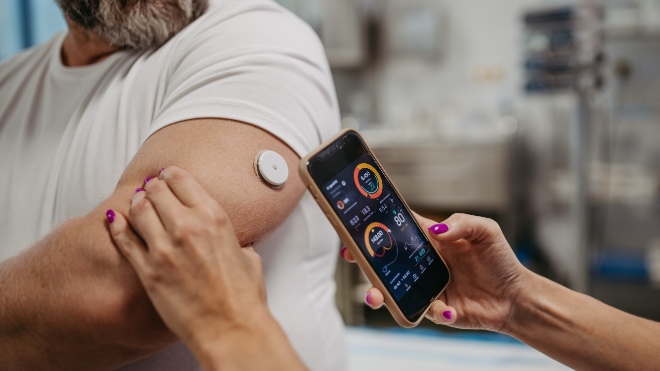
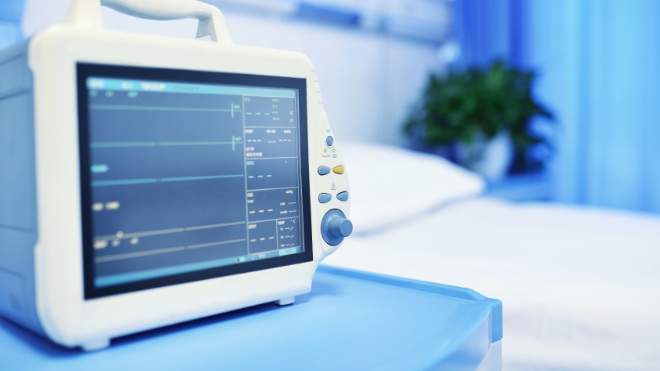
Examples of medical devices include surgical implants, wheelchairs, disposable gloves, pacemakers and infusion pumps.
Indent 4 of the definition above includes medical devices which ‘provide information by means of in vitro examination of specimens.’ However, Article 1(6) MDR specifically states that the Regulation does not apply to in vitro diagnostic medical devices covered by Regulation (EU) 2017/746. Therefore, an IVD can be seen as a subset of the medical device family, but with its own governing Regulation IVDR (EU) 2017/746.
The definition of an in vitro diagnostic medical device (Article 2 (2) IVDR):
'in vitro diagnostic medical device' means any medical device which is a reagent, reagent product, calibrator, control material, kit, instrument, apparatus, piece of equipment, software or system, whether used alone or in combination, intended by the manufacturer to be used in vitro for the examination of specimens, including blood and tissue donations, derived from the human body, solely or principally for the purpose of providing information on one or more of the following:
- concerning a physiological or pathological process or state
- concerning congenital physical or mental impairments
- concerning the predisposition to a medical condition or a disease
- to determine the safety and compatibility with potential recipients
- to predict treatment response or reaction
- to define or monitor therapeutic measures
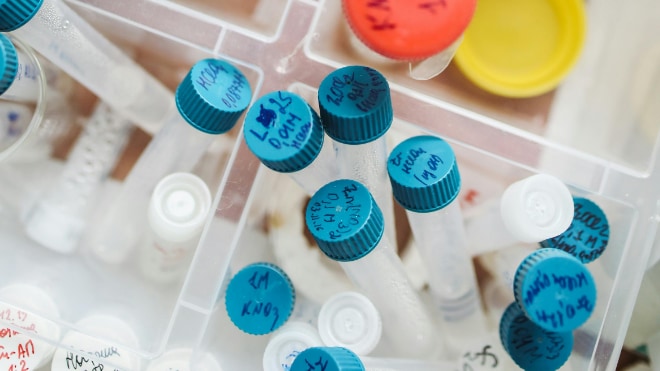
Specimen receptacles are also deemed to be in vitro diagnostic medical devices.
Examples of IVDs include laboratory machines which screen for infectious agents, compatibility for blood or tissue such as ABO or Rhesus and genetic tests. Self-tests for pregnancy, blood sugar and cholesterol are included in the definition. Companion diagnostics, where a device is specifically linked to a medicinal product to evaluate therapeutic response, are also categorised as IVDs.
Patient vs Sample
An exclusion of the IVDR is any ‘invasive sampling products or products which are directly applied to the human body for the purpose of obtaining a specimen’. Patients are not directly in contact with an IVD, other than a self-test IVD, which is not considered invasive. A sample of urine, blood or saliva which is collected from the patient, is then prepared and analysed by an IVD, either as a self-test, near-patient test (such as a hospital room) or in a laboratory. The results are then used for the management of the patient along with other therapeutic options.
A device which obtains a sample from the patient in an invasive way such as a spinal needle for CSF collection or a punch biopsy for a tissue sample, falls under the medical device umbrella.
Blurred lines
Of course, there may be cases where a product is a combination of a medical device and an in vitro diagnostic medical device. Both regulations are clear in this situation (as stated in Article 1 (4) IVDR and Article 1 (7) MDR).
Any medical device which incorporates, as an integral part, an in vitro diagnostic medical device, shall be governed by the MDR, while the IVDR will apply to the in vitro diagnostic part of the device. The manufacturer will then have to meet both regulatory requirements in order to gain a CE mark for the combined device.
In a nutshell
In vitro diagnostic medical devices are a subcategory of medical devices with their own regulatory framework IVDR (EU) 2017/746. Although there is considerable overlap with the MDR (EU) 2017/745, it is imperative to categorise the product correctly from the beginning of the EU market access journey.
For further information regarding compliance with the EU MDR or IVDR, contact Mantra Systems for a FREE and open discussion.