Labelling is a crucial aspect of medical device compliance, ensuring that essential information is effectively communicated to users. Labelling includes written, printed, or graphic details on the device itself, its packaging, or accompanying materials such as Instructions for Use (IFU). Regulatory bodies require manufacturers to provide clear and accurate labelling to enhance patient safety, facilitate proper usage, and comply with international standards.
Medical Device Labelling Standard: ISO 15223-1:2021
ISO 15223-1 sets out requirements for symbols used in medical device labelling to communicate information about the safe and effective use of devices. The latest version, ISO 15223-1:2021, includes additional symbols to comply with the requirements of EU MDR 2017/745.
According to the ISO 15223-1 standard, medical device labelling symbols are organised into seven categories:
- Manufacturing: Symbols related to the manufacturing process of the device.
- Storage: Symbols indicating specific storage conditions for the device.
- Safe use: Symbols providing information on the safe and proper use of the device.
- Sterility: Symbols indicating the sterile condition of the device or instructions related to sterility.
- IVD specific: Symbols specific to in vitro diagnostic devices.
- Transfusion/Infusion: Symbols related to transfusion or infusion procedures.
- Others: Symbols that do not fall into the above categories but are still relevant to medical device labelling.
Standardised symbols help manufacturers effectively communicate vital information to users, enhancing safety and reducing risks of errors or misinterpretation.
Regulatory requirements mandate that devices must be clearly identifiable as medical devices. The medical device symbol, in accordance with ISO 15223, can be displayed on the label to facilitate recognition and ensure regulatory compliance.
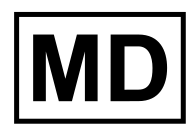
Additionally, manufacturers must adhere to labelling regulations outlined in GSPR 23.1(a) and GSPR 20.1(a). These guidelines specify that certain label information must also be included in the Instructions for Use (IFU), and any symbols used on the label may require an explanation within the IFU.
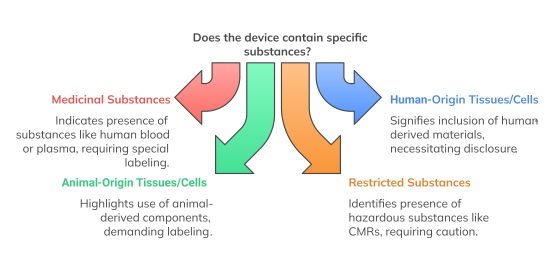
Substances Specific Information
The label must also specify if the device contains or incorporates any of the following substances:
Label Marking Requirements (ISO 20417:2021)
ISO 20417:2021 defines a label as “written, printed, or graphic information appearing on the item itself, on the packaging of each item, or on the packaging of multiple items.” According to this standard, manufacturers must ensure that the device is marked with the relevant information, unless:
- The size of the device does not allow for fixation of the information.
- The nature of the outer surface of the device does not allow for the information to be fixed.
- The omission of the markings does not negatively affect the benefit-risk balance as per ISO 14971:2019.
Packaging and Sterility Requirements
Packaging plays an essential role in ensuring that medical devices remain protected during transport, storage, and handling. ISO 11607 specifies requirements for the development and validation of processes for packaging medical devices. Compliance with ISO 11607 helps demonstrate conformity with essential requirements. Similar to the FDA, the EU requires compliance with ISO 10993-1 for the biological evaluation of medical device packaging materials.
EU MDR 2017/745 annex I GSPR, specifies the packaging requirements of medical devices. The requirements can be summarised as;
- The packaging must protect the device and maintain its integrity, ensuring it remains sterile if applicable.
- Non-sterile devices must be packaged in a way that maintains their cleanliness and integrity.
- The packaging must be designed to minimise contamination risks during transportation and storage.
For sterile devices, the packaging must ensure the device remains sterile until the packaging is opened.
- The sterile packaging of a device should include the following information:
- An indication to recognise the packaging as sterile.
- A declaration that the device is in a sterile condition.
- The method of sterilisation.
- Instruction to check the instructions for use on what to do if the sterile packaging is damaged or unintentionally opened before use.
Checklist for EU MDR Medical Device Labelling
Avoid compliance pitfalls with this checklist of essential labelling requirements for medical devices:
| Key Requirement | Yes/No |
|---|---|
| Product name | |
| Product’s lot number or serial number | |
| All details needed for a user to identify the device, the contents of its packaging and the intended purpose of the device | |
| Contact details of the manufacturer (e.g., name and address) | |
| In the case of non-EU-based manufacturers, the name and address of their authorised representative | |
| Where relevant, information per Section 10.4.5. of the MDR | |
| The UDI carrier referred to in Part C of Annex VII of the MDR | |
| An indication of any special storage or handling conditions | |
| A clear indication of the time limit for using the device safely, or where this is not applicable – the date of manufacture | |
| If the product is supplied in a sterile condition, an indication of its sterile state and method of sterilisation | |
| An indication if the product is for single-use | |
| An indication if the device is custom-made or intended for clinical investigation only | |
| Other warnings and precautions to be taken that need to be brought to the user’s immediate attention |
Why is medical device labelling so important?
For medical devices to be used safely and effectively, it is crucial that patients, caregivers, and healthcare providers receive clear and concise instructions, guidance, and warnings. Failure to follow these instructions, or mishandling the device, can result in malfunction, injury, or even death. While some mistakes may cause severe harm, even minor errors can impact patient outcomes in significant ways.
The well-being of the user must always be the primary concern for those involved in the manufacturing and design of medical devices. Effective labelling is essential in preventing misuse and ensuring proper usage. Moreover, complying with labelling standards isn’t just about safety—it also helps manufacturers meet regulatory requirements, avoiding costly delays, recalls, or legal issues.
The Final Stamp of Approval on Labelling
Labelling and packaging are critical aspects of medical device regulation, ensuring both compliance with the EU MDR and safety for patients and users. Medical device manufacturers must adhere to the extensive labelling requirements, including clear information on the device’s identity, use, storage, and associated risks. Failure to comply with these requirements can lead to regulatory challenges and safety concerns. By adhering to the EU MDR labelling and packaging guidelines, manufacturers can ensure their devices are compliant, safe, and ready for market entry.
Need expert guidance on medical device labeling? Mantra Systems is here to help. Our tailored solutions ensure your devices meet all regulatory requirements while streamlining compliance processes. Reach out today for tailored solutions!