
Why medical doctors can drive MDR compliance

Victoria Cartwright
Why medical doctors can drive MDR compliance

It is easy to become overwhelmed while trying to piece together an MDR strategy so it’s really important to consider one central fact — working with the MDR is, in a large part, about knowing how to work with clinical evidence. Whether it’s generating, searching, reviewing, appraising, interpreting or reporting clinical data, medical evidence is at the heart of MDR compliance.

Video: What is MDR compliance of medical devices?

However, in the absence of a medical or scientific background, working with clinical evidence isn’t easy. With the increased complexities of the new EU MDR, medical device manufacturers need easy access to skilled professionals who are comfortable working with and generating clinical evidence.

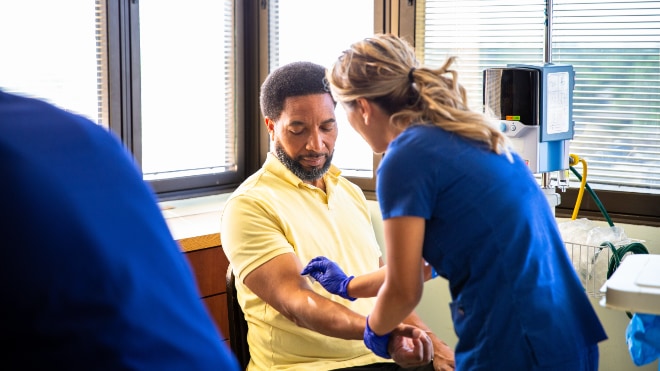
Medical doctors are increasingly recognised as being perfectly positioned to meet this requirement. Doctors are trained to work with clinical evidence from the early stages of their career. Furthermore, in many cases they have worked as clinical investigators on medical studies, meaning that they are better qualified to drive compliance with clinical investigation data entry.

Medical doctors also have a thorough understanding of the conditions that medical devices address, and have general clinical training that enables them to put diseases and interventions into context. In turn, this means that doctors are able to advise on pertinent data-points that can extract maximum value from Post-Market Clinical Follow-up (PMCF) and other performance monitoring studies.

Another advantage of working with medical doctors for MDR compliance is that doctors are professionally trained to perform objective assessments of clinical information, resisting sources of bias. This professional objectivity is of huge value in meeting MDR requirements for performing Clinical Evaluation of medical devices. Engaging a suitably-trained medical doctor from outside your organisation demonstrates a commitment to regulatory objectivity that will be favourably viewed by Notified Bodies and other regulators.

Doctors are also of value when trying to assess any gaps in a medical device’s clinical evidence portfolio. An expertly-performed literature search & review helps ensure that no relevant data is overlooked, and can also help to minimise expenditure on clinical investigations to generate new clinical data.

In summary, doctors have much to offer in helping medical device companies meet MDR requirements. Whether you are looking to design PMCF studies or perform Clinical Evaluation, engaging a medical doctor can be hugely advantageous.

So how can you find medical doctors who are trained in MDR compliance? At Mantra Systems we have a dedicated team of expertly-trained doctors who are specialists in producing and maintaining MDR strategies. Please see our Medical Device Regulatory Consulting Services or contact us to see how best we can work together.


Related articles

  1. A precariously balanced pile of ping-pong balls and wooden bars.

    The Shift from MDD to MDR: Key Differences in Demonstrating Equivalence

    This transition has demanded that device safety must be demonstrated with more evidence. We offer tips for winning equivalence claims.

    Kamiya Crabtree Kamiya Crabtree Regulatory Medical Writer
  2. A pen and notepad, resting on a laptop.

    Periodic Safety Update Report: Requirements under EU MDR

    Post-Market Surveillance has become more stringent. We help you to understand what manufacturers need to consider.

    Chandini Valiya Kizhakkeveetil Chandini Valiya Kizhakkeveetil Regulatory Medical Writer
  3. An EU flag on a pole flies between two US flags against a blue sky.

    Webinar: From USA to Europe - Accelerating Your Path to the Medical Device Market

    We showed you how to quickly transform your U.S. regulatory work into a compliant EU MDR submission.

    Chandini Valiya Kizhakkeveetil Chandini Valiya Kizhakkeveetil Regulatory Medical Writer
  4. A poster frame for our Clinical Evaluation video series featuring Paul Hercock.

    Guide to Clinical Evaluation: Common Pitfalls & Useful Resources

    Part 5 - In the final video from this series, we explore five major pitfalls that often derail clinical evaluations.

    Dr Paul Hercock Dr Paul Hercock Chief Executive Officer
  5. A US-style 'changes ahead' warning road sign.

    Device Modifications: When a Simple Change Becomes a Regulatory Nightmare

    As regulatory consultants we understand how minor modifications to a device can often cause disproportionate disruption.

    Kamiya Crabtree Kamiya Crabtree Regulatory Medical Writer
  6. Webinar announcement poster.
    Webinar: Regulatory & Cybersecurity Essentials for medical device software and AI-enabled devices

    Our webinar with Cyber Alchemy addressed bringing AI-enabled medical devices to market with both the right regulatory and cybersecurity foundations.

    Shen May Khoo Shen May Khoo Regulatory Project Lead
  7. A simple jigsaw with iconography representing growth printed on it.

    Leveraging Post-Market Surveillance Data for Continuous Improvement

    PMS isn’t just about compliance, it’s an opportunity for improvement, enhance patient safety & innovate.

    Shen May Khoo Shen May Khoo Regulatory Project Lead
  8. A poster frame for our Clinical Evaluation video series featuring Dr. W. Brambley.


    Guide to Clinical Evaluation: CEP Strategy & CER Structure

    Part 4 - We explore how these guide reviewers through the evidence that supports safey, performance, and conformity.

    Dr Will Brambley Dr Will Brambley Lead Medical Writer
  9. A checklist being ticket-off in pen.

    The Critical Role of Pre-Submission Reviews in EU MDR Clinical Evaluations

    Ensuring your CER is robust and aligned with current standards is critical. How much Clinical Evidence is enough?

    Sandra Gopinath Sandra Gopinath Chief Regulatory Officer

More articles

Need help producing compliant CEPs & CERs? We are offering FREE CEPs to 5 qualifying applicants per week

Get your free CEP