Implementing Master UDI-DIs: Key Insights from MDCG 2025-7

Dr Will Brambley
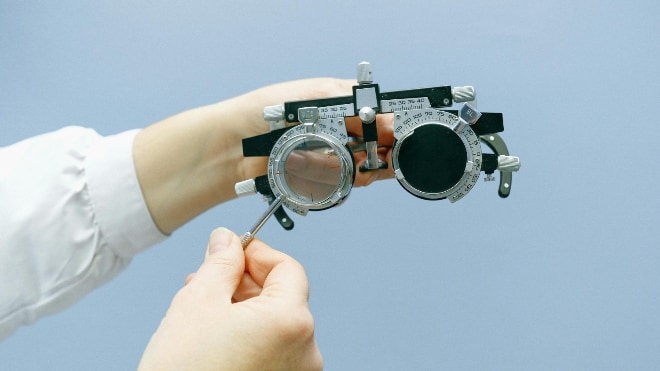
A vision testing device.

The latest guidance from the Medical Device Coordination Group (MDCG), published as MDCG 2025-7, introduces the implementation of Master Unique Device Identification - Device Identifiers (UDI-DIs) for a number of highly individualised devices.

The use of a Master UDI-DI aims to strengthen and enhance the traceability and recording of UDIs. Master UDI-Ds allow the grouping of highly individualised devices with specific design similarities under a common identifier to be assigned and registered on Eudamed. This should effectively eliminate the need for a manufacturer to have dozens if not hundreds of UDI-DIs for very similar devices by unifying them under one Master UDI-DI.

Devices Addressed by MDCG 2025-7

The devices covered by this guidance are:

  • Contact lenses
  • Spectacle frames
  • Spectacle lenses
  • Reading spectacles

According to MDCG 2021-24:

  • Corrective contact lenses are classified as Class IIa (short-term use) or Class IIb (long-term use) medical devices.
  • Spectacle frames, spectacle lenses, and reading spectacles are classified as Class I medical devices.

Implementation Deadlines

MDCG 2025-7 aims to clarify the timelines of implementation of Master UDI-DIs for these devices, as well as the obligations of manufacturers relating to Eudamed and vigilance reporting.

Key dates include:

  • Manufacturers must place UDI carriers on the label of a device and on all higher levels of packaging for Class I devices from 26 May 2025
  • Manufacturers must use the UDI/Device registration module in Eudamed by Q1 2026
  • Master UDI-DIs become mandatory for contact lenses from 9 November 2026
  • Master UDI-Dis become mandatory for spectacle lenses and reading glasses from September 2028
  • If a manufacturer has assigned a Master UDI-DI to a device before Q1 2026, they must use it for vigilance reporting.

Moving Forward with Master UDI-DIs

The introduction of Master UDI-DIs marks a step forward in improving the traceability and administrative workload of highly individualised medical devices. By allowing manufacturers to group similar products under a single identifier, the guidance aims to reduce burden while maintaining safety and compliance standards. Manufacturers of these devices should take note of the implementation timelines and obligations, particularly around Eudamed registration and vigilance reporting, to ensure that they can prepare effectively for full compliance.


Related articles

  1. Collage art showing a pair of binoculars, an analogy for surveillance.

    How EU MDR Post Market Surveillance differs from FDA post-market expectations

    We compare manufacturer-specific post-market obligations across both regulatory systems.

    Dr Gayle Buchel Dr Gayle Buchel Chief Medical Writer
  2. An arrow arcs from the US over to Europe.

    How EU device classification differs from the US - Are you Prepared?

    Did you know an FDA Class II medical device could be immediately considered as a high-risk Class III device under European Union regulations?

    Gabriela Cardoso Gabriela Cardoso Regulatory Medical Writer
  3. A magnifying glass inspecting a number of wooden cubes with question marks upon them laid upon a blue table. The wooden cube under the magnifying glass has a lightbulb painted on it.

    Fixing the MDR and IVDR? The Commission’s Proposed Amendments and What They Mean for Manufacturers

    Exploring the key elements of this proposal.

    Chandini Valiya Kizhakkeveetil Chandini Valiya Kizhakkeveetil Regulatory Medical Writer
  4. Two arms point at a sign and hold a question mark, in an abstract pop-art style.

    Regulatory Reset? The EU’s Proposed Changes to MDR and IVDR Explained

    Changes published in December 2025 aim to streamline EU medical device and in vitro diagnostics. We explain who is impacted and how.

    Dr Gayle Buchel Dr Gayle Buchel Chief Medical Writer
  5. A pair of glasses rests on an eye test chart.

    Did You Know Your Glasses Were a Medical Device? A Regulatory Guide for Manufacturers

    The importance of correct classification and our recommended path to avoid common ophthalmic device 'gotchas'.

    Gabriela Cardoso Gabriela Cardoso Regulatory Medical Writer
  6. A precariously balanced pile of ping-pong balls and wooden bars.

    The Shift from MDD to MDR: Key Differences in Demonstrating Equivalence

    This transition has demanded that device safety must be demonstrated with more evidence. We offer tips for winning equivalence claims.

    Kamiya Crabtree Kamiya Crabtree Regulatory Medical Writer
  7. A pen and notepad, resting on a laptop.

    Periodic Safety Update Report: Requirements under EU MDR

    Post-Market Surveillance has become more stringent. We help you to understand what manufacturers need to consider.

    Chandini Valiya Kizhakkeveetil Chandini Valiya Kizhakkeveetil Regulatory Medical Writer
  8. An EU flag on a pole flies between two US flags against a blue sky.

    Webinar: From USA to Europe - Accelerating Your Path to the Medical Device Market

    We showed you how to quickly transform your U.S. regulatory work into a compliant EU MDR submission.

    Chandini Valiya Kizhakkeveetil Chandini Valiya Kizhakkeveetil Regulatory Medical Writer
  9. A poster frame for our Clinical Evaluation video series featuring Paul Hercock.

    Guide to Clinical Evaluation: Common Pitfalls & Useful Resources

    Part 5 - In the final video from this series, we explore five major pitfalls that often derail clinical evaluations.

    Paul Hercock Paul Hercock Chief Executive Officer

More articles

Need help producing compliant CEPs & CERs? We are offering FREE CEPs to 5 qualifying applicants per week

Get your free CEP